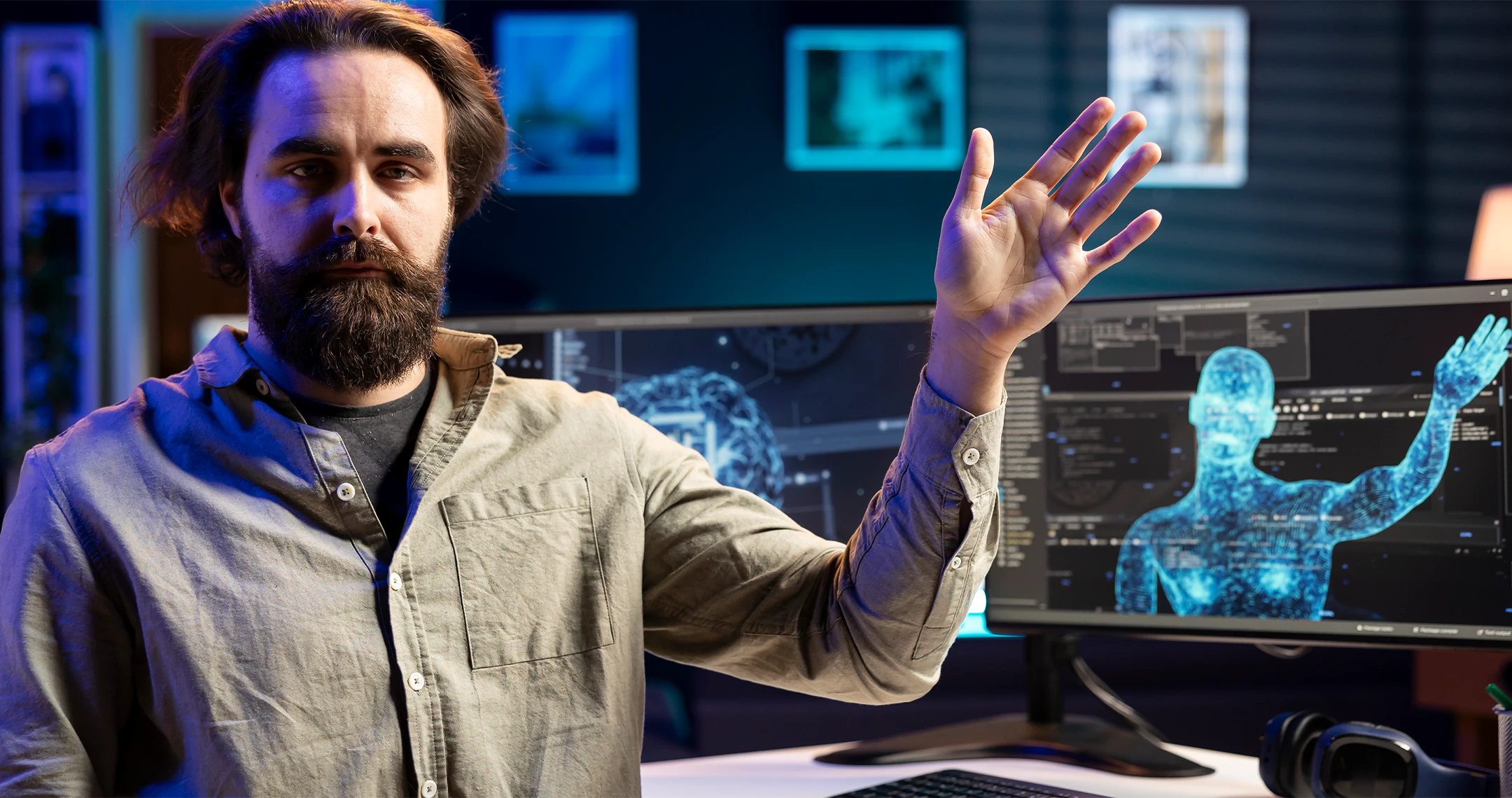
Not long ago, something curious happened to me. A friend showed me a document with very interesting ideas and, as soon as I saw it, I thought: “This smells like AI.”
When he finished his presentation, I told him I loved it but that I would make a few adjustments, so it felt “more human.” I started giving him a full explanation of how to improve the file so it wouldn’t look like AI had done it… until I noticed he could barely hold back his laughter.
I stopped my explanation and asked what was going on. To my surprise, his answer was simple: “None of this was made with AI, I did it myself.” He wasn’t bluffing.
It was a hilarious moment, and above all, I was glad I caught his laughter in time to understand what was happening. It could have remained just a funny anecdote, but in reality, it left me with three important reflections.
1. AI is already at a level that makes us question what we consume
Artificial intelligence is producing results so good that sometimes we doubt whether a machine or a human made something. Surely, there will come a time when we can no longer tell the difference.
Just like someone who writes flawlessly thanks to autocorrect, AI may become such a natural and ingrained tool that it no longer matters which part was done by a person and which part by a machine. And if it does matter, chances are we won’t be able to notice it at first glance.
2. The Human Touch Remains Essential
There are capabilities we can, and should, still execute very well without relying on artificial intelligence. It starts with authentic creativity, defined by original ideas born from human experiences, emotions, and contexts. While AI can enhance this process, the foundation remains the human role of creating solutions for familiar contexts. Similarly, strategic vision must be based on real market experience to ensure proper decision-making, as AI can be arbitrary in this area and overlook crucial nuances.
Beyond the intellectual, the human element is irreplaceable in leadership. Empathy and the ability to inspire or motivate teams will always be more effective from one human to another, just as building trust is essential for strong relationships with clients and colleagues. Furthermore, we need human ethical judgment to choose what is right beyond what the data shows; without proper context, AI may suggest decisions that negatively affect minorities or specific groups.
Introducing immature AI tools into processes we already manage well often adds complexity rather than value. As we discussed in our article The Unforeseen Challenges of Adopting AI, we must ensure that these tools do not create more problems than they solve. Innovation does not mean adding unnecessary costs, but rather using technology in the service of efficiency. Ultimately, if an implementation does not solve a real problem and only increases costs or support times, it is simply not efficient.
3. The value of human talent
In the end, what struck me most was that the document was so well-executed, I assumed it had been created by a machine. But it wasn’t; it was the work of my colleague. That moment confirmed how lucky I am to work with such a talented team, leading me to reflect that not everything that shines is AI. Human talent, and how we use our tools, remains the most valuable asset in every workplace.
At Schub, we believe that technology should serve your business rather than complicate it.
We can help you optimize your Cloud, Security, and Compliance with a focus on efficiency and real-world results. Let our team handle the complexity so you can focus on leading your business.
Let’s build a cloud strategy based on real intelligence. [email protected]
Writers: Ben Rodríguez
Reviewer: Luis Vinay, Eduardo Mora
Illustrator: Dai Fiorenza
In this article, AI was used to check grammar and syntax.